Skip to content
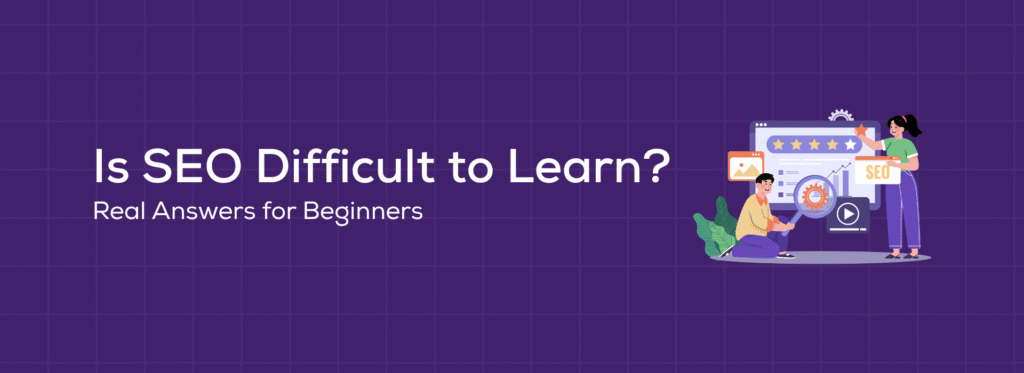
SEO Difficult To Learn? Real Answers for Beginners
All Post Is SEO Difficult to Learn? Real Answers for Beginners Author: Vinay Jadhav | Trainer at Epixable Academy Updated on: September 08, 2025 Is SEO Difficult to Learn? When people first start, they often feel lost. There are so many things to understand — Google updates, keywords, rankings, backlinks, and more. Feeling overwhelmed is completely normal. Think about it like learning to ride a bicycle. The first time, you might fall a few times, but once you get the balance, it becomes easy and even fun! SEO is just like that. Contents Is SEO even important? 3 Pillars of SEO On-page SEO Off-page SEO What is Technical SEO? How to Optimize for AI Engines Which are the best free SEO tools for Beginners? FAQ’s Before We Ask “Is SEO Hard?”, Let’s First Understand If SEO Is Even Important Before thinking about whether SEO is difficult or easy, we need to answer a more basic question:Is SEO still important in today’s world? Many beginners get confused because they often hear people asking things like “Is SEO dead?” These kinds of questions make you wonder if learning SEO is even worth your time. And honestly, it’s normal to feel unsure. People everywhere are still searching for information online — every minute, every second.If people search, then websites need to show up.And for websites to show up, SEO has to exist So no , SEO is not dead , but yes SEO is changing. Search is no longer only about typing keywords into Google. Today, people also use voice search, smart assistants, and AI tools like ChatGPT, Gemini, and other answer engines. These tools don’t just give links — they give direct answers. That means modern SEO is not only about ranking on Google, but also about giving clear, helpful answers that AI systems can use. So the real question is not “Is SEO dead?”The real question is : How do we evolve with SEO as search continues to evolve? Once you understand this, learning SEO makes much more sense — because now you’re not just learning for Google, you’re learning for the entire internet, including AI systems that deliver answers. The 3 Non-Negotiable Pillars You Must Learn to Understand SEO Getting good at SEO might sound tough, but when you break it down, there are just four big areas (or “pillars”) you need to focus on. Think of these as the building blocks that make any website strong in the eyes of search engines. Let’s look at each one in a simple way: On-Page SEO: This means making changes right on your website so search engines know what your pages are about. You want each page to be easy to read and really helpful, both for people visiting and for Google trying to figure out your site. Keywords Keywords are the main clues that tell search engines what your page is about. Using the right keywords is the key to getting your site seen by people who are searching online. Where to Place Keywords: Page Titles and Meta Title The meta title is what shows up on the search results page (the blue link people click). Your primary keyword should be right here, close to the start. Example : If your main keyword is “learn SEO” a page title could be: “Learn SEO: Simple Steps for Beginners” Headings (H1, H2, H3 Tags) H1 tag: This is typically your main heading at the top of the page. There should only be one H1 tag per page, and it should include your most important keyword. H2 tags: These are sub-headings for breaking your content into sections. Use secondary keywords or related phrases here. H3 tags: These go under H2s for even smaller sections; you can use smaller keyword variations if it fits naturally. Meta Description This is a short summary (about 150-160 characters) about your page, seen under the link in search results. Include your main keyword near the start. Make it inviting so people want to click. Example : “Learn SEO step by step with easy tips for beginners. Discover how to use keywords, headings, and meta descriptions to boost your website.” How to Use Keywords in Your Content Use keywords naturally in your writing. Don’t overuse them—make sure your sentences make sense. Try your main keyword once or twice in every hundred words. Focus on being clear and helpful How Much to Place & What to Avoid One H1 tag per page — your key topic. Use H2 and H3 tags as needed to organize sections. Place your main keyword in at least one H2, and naturally in the content. Use each keyword where it makes sense, but avoid “stuffing” (using it too much). Don’t forget your meta title and meta description—they matter both for search engines and for getting clicks! Quality Content: Write clearly and keep your information helpful. If visitors find answers quickly, search engines will notice. Images and Alt Text: Write clearly and keep your information helpful. If visitors find answers quickly, search engines will notice. Internal Links: Link to other useful pages within your own website. This makes it easier for people to find more info, and for search engines to crawl your site. Off-Page SEO: Off-page SEO is all about what happens outside your website that helps build its reputation Backlinks: When trusted websites link to yours, it’s like getting a digital thumbs-up. More backlinks from high-quality sites can really boost your rankings. Social Shares: If people share your content on social media, it brings more visitors and tells search engines your site is worth sharing. Online Mentions: Getting mentioned in online articles, blogs, or forums can also help your reputation. What is Technical SEO? Technical SEO is all about making sure your website works well behind the scenes so search engines can easily find and understand your pages. When your technical setup is good, your site loads faster, works on all devices, and shows up correctly in search results. Main Things to Focus On in Technical SEO: Site
SEO Difficult To Learn? Real Answers for Beginners Read More »