Skip to content

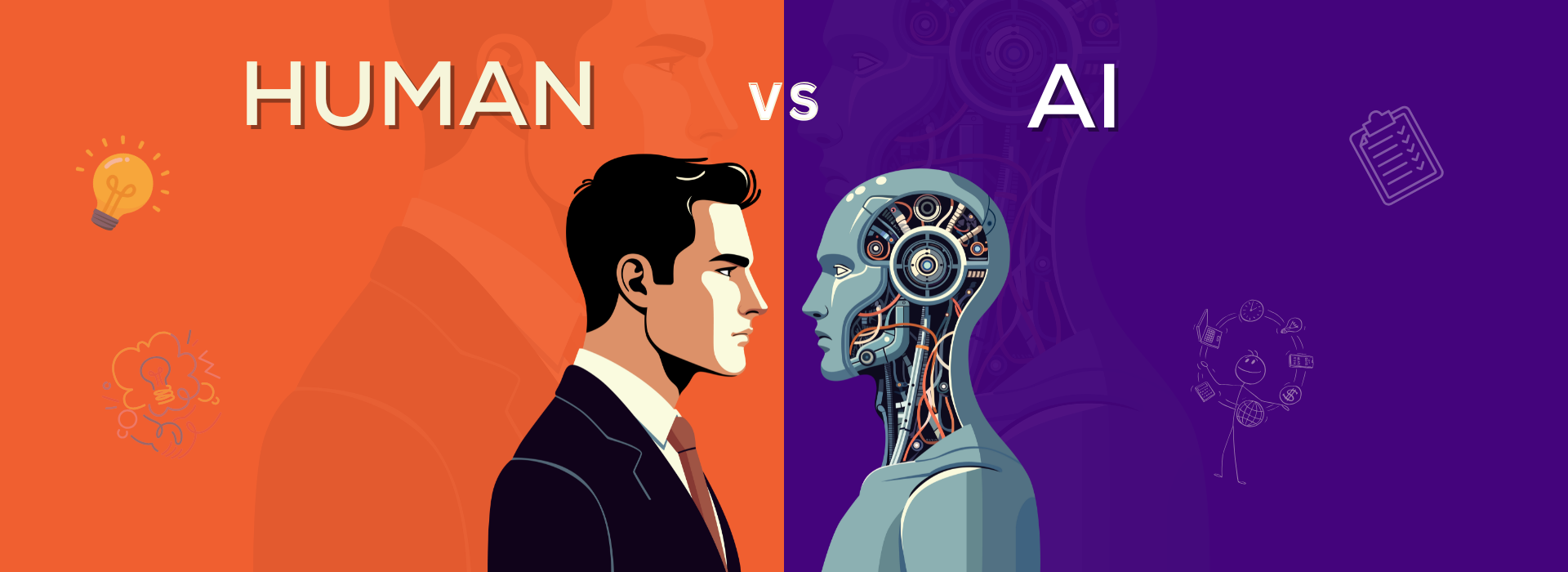
The debate around Human vs AI in marketing strategy often starts with the wrong question. Instead of asking whether AI is powerful enough to replace human decision-making or eliminate marketing jobs, the real question should be what kind of decisions marketing actually requires and who is capable of owning their consequences.
Marketing is not a single action or a set of automated tasks tied to marketing jobs. It is a layered decision-making process that moves from execution and optimization to strategy, ethics, and brand responsibility. AI performs exceptionally well at the lower layers—analyzing data, automating tasks, identifying patterns, and optimizing performance at scale. In these areas, AI is not just useful; it is essential for modern marketing and is already reshaping many operational marketing jobs.
However, as decisions move higher up the ladder, the nature of decision-making changes. Strategic decisions are not about what worked yesterday, but about what should be done tomorrow. Ethical decisions are not about performance metrics, but about trust, impact, and responsibility. Brand decisions are not about speed, but about consistency, emotion, and long-term perception. These are areas where data alone is not enough—and where many core marketing jobs still rely heavily on human judgment.
This is where human judgment becomes irreplaceable.
AI can suggest what is most efficient, but it cannot decide what is appropriate. It can optimize numbers, but it cannot understand emotions. It can follow patterns, but it cannot fully understand context, culture, or consequences. Most importantly, AI cannot take responsibility when a decision affects people, brand reputation, or public trust—responsibilities that remain central to senior marketing jobs.
Humans, on the other hand, bring strategic thinking, emotional intelligence, ethical awareness, and accountability to marketing. In an AI-driven environment, the human role is not reduced—it is elevated. Marketing jobs are not disappearing; they are evolving. Humans no longer need to focus on repetitive execution; instead, they guide direction, set boundaries, validate AI-driven insights, and protect brand values.
The future of marketing is not about choosing between humans and AI—or fearing the loss of marketing jobs. It is about clear ownership and smart collaboration. AI should act as an execution and optimization engine, while humans remain the final decision-makers who define goals, values, and long-term direction.
So, when asking “Human vs AI: Who should own final decisions in marketing strategy?”, the answer becomes clear:
AI can optimize, automate, and assist—but humans must lead, decide, and take responsibility.
This balance is what makes marketing jobs not just efficient, but meaningful, ethical, and sustainable in the long run.