Skip to content
Stranger things
Netflix’s Marketing Strategy Explained
Stranger Things isn’t just a show anymore — it’s a global emotion.
When Season 5 finally arrived, the internet exploded. Fans rushed to Netflix the moment it dropped. Memes took over Instagram. TikTok went wild. News headlines screamed record-breaking numbers. And while we all enjoyed the chaos in Hawkins and the Upside Down, something much bigger was happening behind the scenes…
Netflix wasn’t just releasing the final season — Netflix was executing one of the smartest marketing strategies the streaming world has ever seen.
From transforming metros into Upside Down portals, to launching immersive fan events across continents, to tapping into nostalgia at the perfect moment — Stranger Things Season 5 became a global marketing masterclass. And the result? Millions of subscribers, massive buzz, and Netflix once again at the center of pop culture.
In this case study, we’re going deep into:
- How Stranger Things became Netflix’s ultimate subscriber magnet
- How Season 5 was marketed across every stage of the funnel
- How India became a major part of the marketing strategy
- What digital marketers can learn from Netflix to grow any brand
If you’re a marketer, student, creator, or someone who just loves Stranger Things — this breakdown will change the way you look at marketing forever.
Let’s enter the Upside Down of Netflix’s strategy…
How popular is Stranger Things?
Before we talk about marketing, we need to understand the power of the product.
Record-breaking numbers
Stranger Things is Netflix’s biggest English-language show. Season 4 already held a top spot in the “most-watched English series” list with over 140 million views in its first 30 days.
When Stranger Things Season 5 (final season) dropped, the first volume pulled in 59.6 million views in just six days, making it the biggest English-language premiere week in Netflix history.
So from a marketing point of view, Stranger Things is:
A tent-pole IP (intellectual property) that can attract new users, bring back old users, and make existing subscribers stay longer.
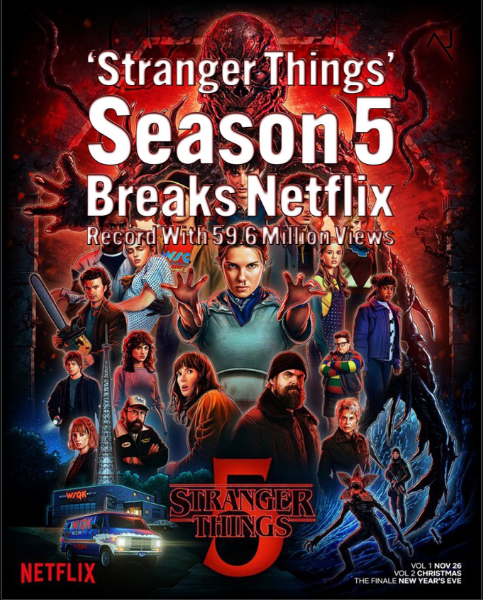
Source : instagram
Stranger Things Marketing Strategy (Positioning)
To use a show as a growth engine, Netflix first had to shape the brand of Stranger Things in the audience’s mind.
One show, multiple hooks
Netflix didn’t sell Stranger Things as just a “horror show” or just a “teen drama”. They positioned it as a multi-layered experience:
For teens & young adults: a show about friendship, growing up, and fighting monsters
For 80s and 90s kids: a nostalgic trip to old music, old bikes, old games
For families: a story-driven series they can binge together
For genre fans: a mix of horror, sci-fi, mystery and emotional drama
This multi-hook positioning made it easier to promote the show to different audience segments with different creatives and messages.
A strong visual identity
Stranger Things has one of the most recognizable visual identities in entertainment — from its red and black neon style, creepy Upside Down vines, flickering lights, and monster imagery to its retro 80s typography and color palette. These elements are used everywhere across the marketing ecosystem: trailers, posters, metro wraps, AR experiences, fan events, and branded activations like InstaStrange. For marketers, this is a perfect example of how a strong, consistent visual language helps a campaign stand out instantly, making the show memorable across every platform and touchpoint.

How Netflix used Stranger Things popularity to attract more subscribers
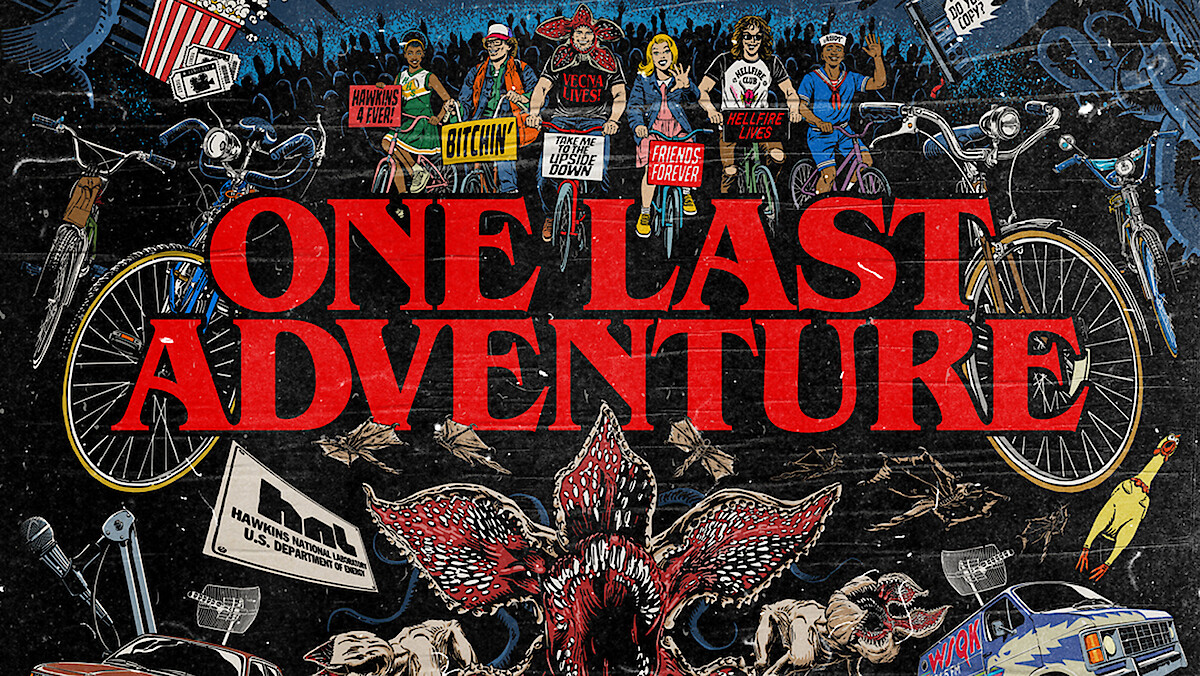
Season 5 as a global “One Last Adventure” event
Netflix launched Stranger Things 5: One Last Adventure fan events in cities across Europe, Asia and the Middle East (Tokyo, Bangkok, Warsaw, Riyadh, Manila, Kuala Lumpur, etc.)
- Immersive Hawkins & Upside Down Sets
Visitors walked through full-scale replicas of iconic locations like Hawkins High corridors, Eddie’s trailer, Vecna’s lair, and Upside Down portals — designed for fans to experience scenes they’ve only watched onscreen. - Themed Food, Drinks & Merch
Pop-up stalls served Stranger Things inspired snacks like frozen “Demogorgon bites,” “Surfer Boy Pizza,” and neon mocktails, along with exclusive merch collections only available at the event. - Exclusive Early Screenings & Sneak Peeks
Attendees watched never-before-seen clips and select scenes from Season 5 before the global release — creating FOMO and generating early hype online. - Dedicated Social Media Photo Zones
Netflix installed professionally lit photo booths (e.g. posing with Eleven’s telekinesis scene, sitting on the iconic Living Room couch with Christmas lights, or standing inside a portal) to drive Instagram-worthy content and viral sharing using branded hashtags. - Actor Appearances & Live Fan Activities
At some global events, fans interacted with cast members, joined Stranger Trivia sessions, and collected digital badges — boosting community engagement and loyalty.
Multi-part release to keep people subscribed
Stranger Things Season 5 is released on Netflix in three distinct volumes/parts.
The release schedule is:
- Volume 1 — first four episodes, released 26 November 2025 globally (in many places, 27 Nov due to time-zones)
- Volume 2 — next three episodes, released 25 December 2025 (Christmas Day)
- Finale (Volume 3 / Episode 8) — full season finale, released on 31 December 2025 (New Year’s Eve)
Why This Release Pattern Acts as a Retention & Engagement Strategy
By splitting the season into three parts across two major global holidays (Christmas and New Year’s Eve), Netflix ensures the show remains a “holiday-event” — times when people are more likely to watch together, binge, or re-subscribe if they had paused the service.
Instead of a one-time “big release” spike, the three-part rollout creates multiple touchpoints for attention:
- Volume 1 — draws in existing fans and new watchers.
- Volume 2 — pulls viewers back during Christmas, a period of downtime for many.
- Finale — delivers closure/finale buzz at New Year’s, encouraging people to stay subscribed or return.
Full-funnel Stranger Things Season 5 marketing strategy
Here’s how Netflix strategically marketed Stranger Things Season 5 across every stage of the funnel:
Top of the funnel: Awareness
Goal: Make sure everyone knows “Stranger Things Season 5 is here – and it’s big.”
Record-breaking headlines
Media coverage shouted: “Stranger Things Season 5 becomes Netflix’s biggest English-language debut with 59.6M views”.
These headlines themselves act as marketing. People think: “If everyone is watching this, I should too.”
Global fan events (“One Last Adventure”)
City-specific activations (Tokyo, Bangkok, Warsaw, etc.) with immersive setups and screenings.
These generate PR stories, blog posts, YouTube vlogs, TikToks — all organic awareness.
India: Metro, airport and street takeovers
Netflix transformed metros in Delhi and Mumbai into Upside Down trains with full Stranger Things wrapping and themed interiors
Stranger Things visuals appeared in multiple Indian cities across metros, airports and streets, as part of Netflix’s largest Stranger Things campaign yet in India.
This is mass awareness: even non-Netflix users and non-binge-watchers see the brand daily.
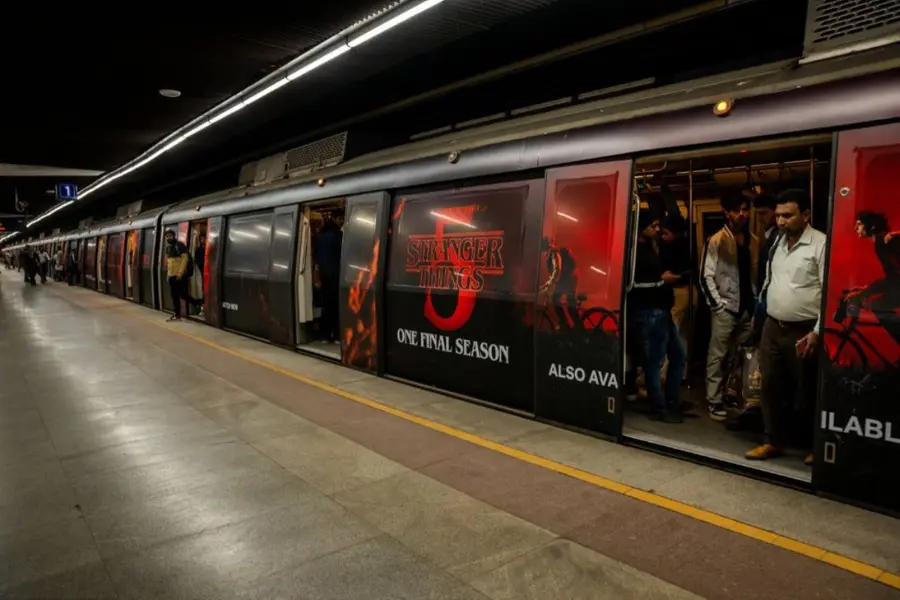
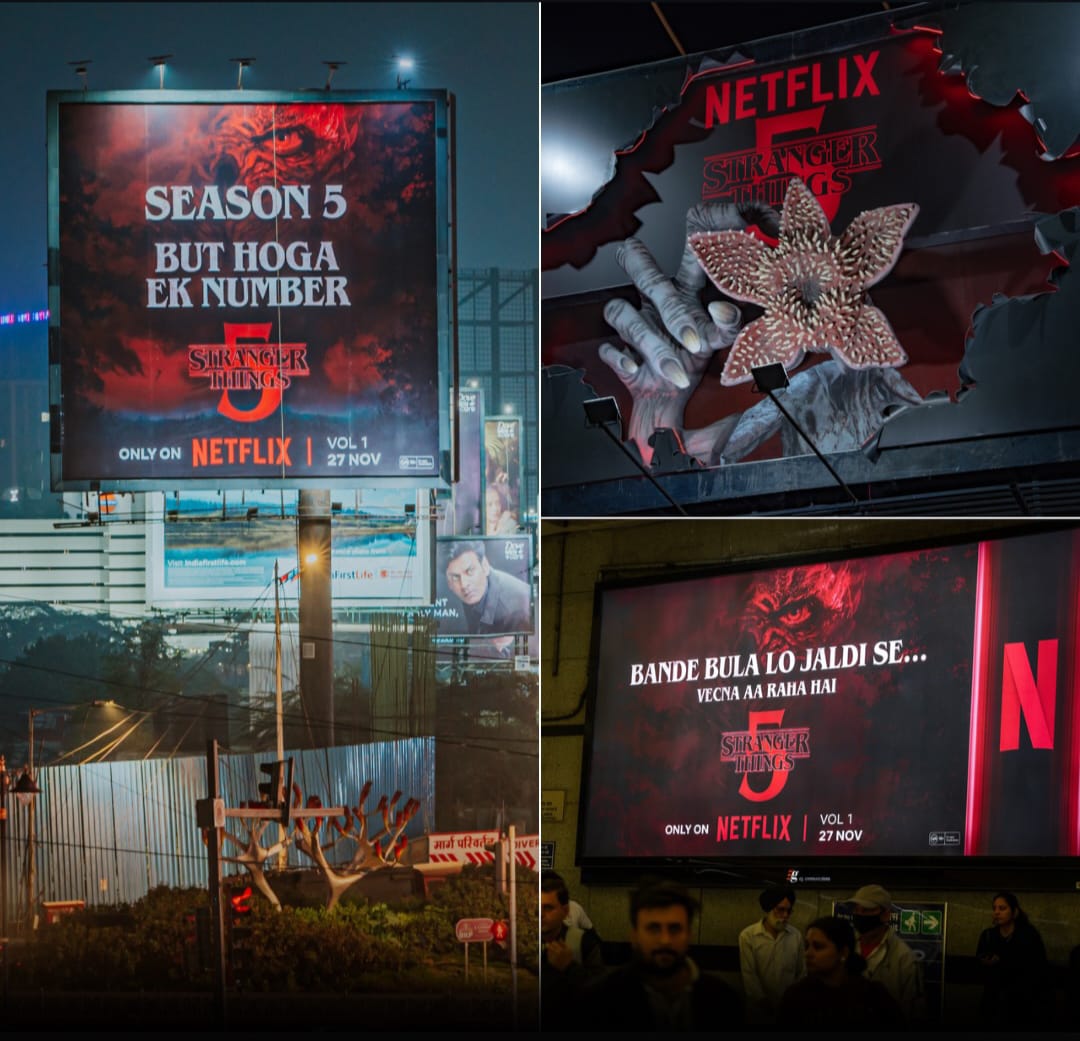
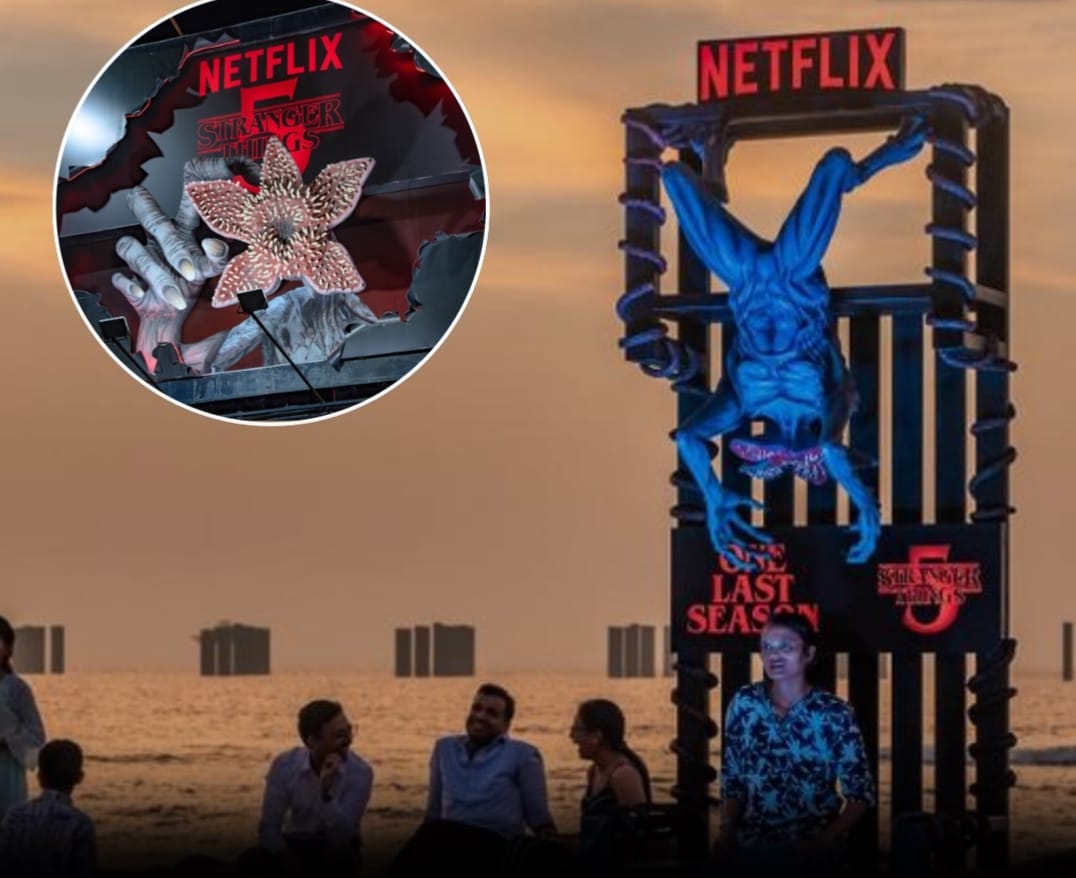
Source : instagram
Middle of the funnel: Interest & Consideration
Goal: Turn “I’ve heard of it” into “I’m curious, maybe I should watch it”.
Teasers, trailers and recap content
Netflix released missing-poster-style teasers, intense trailers, and recap videos to remind people of earlier seasons and set up Season 5.
Character-driven posts and nostalgia hooks
Short clips featuring fan-favorite characters
Posts about 80s songs used in the show, behind-the-scenes content, and “one last ride” style messaging
This taps into emotions: people are not just watching a show, they’re saying goodbye to characters they grew up with.
Bottom of the funnel: Conversion
Goal: Turn interest into actual Netflix subscriptions.
Homepage takeovers & personalised recommendations
When Stranger Things Season 5 launched, it dominated the Netflix home screen and “Top 10” row in many markets.
Users who like sci-fi, horror, teen drama, or previous seasons get Stranger Things Season 5 pushed high in their recommendation feed.
This is like prime shelf space in a supermarket.
Strategic timing: holiday & event-based releases
Volume releases around holidays (Christmas, New Year’s Eve) are timed when people have more free time and are more willing to pay for entertainment.
If someone is thinking “Should I subscribe this month?”
Stranger Things + holidays = “Okay yes, let’s do it.”FOMO & social proof
Everyone posting reactions, memes, “no spoilers but…” tweets
Media covering record numbers and fan reactions
This creates FOMO (fear of missing out), which is a powerful psychological push to finally subscribe or re-subscribe.
What benefits did Netflix get from all this?
From this Season 5 marketing strategy, Netflix gained:
Record-breaking debut numbers
59.6 million views in six days for Volume 1 – the biggest English-language premiere week ever for Netflix, giving them huge PR and brand visibility.
Stronger brand association
Stranger Things is now deeply tied to Netflix’s identity. For many users, “If I want Stranger Things, I need Netflix.”
Higher subscriber retention in Q4
With volumes released across November and December and a finale on December 31, Netflix has strong content to reduce churn during a key quarter (holiday season).
New revenue streams & partner value
Merchandising and licensing add extra revenue beyond subscriptions.
Partner brands in India (Instamart, Swiggy, telecom brands, etc.) get attention and engagement, and Netflix gets extra distribution and buzz.
Cultural dominance
For a few weeks, “Stranger Things Season 5” becomes one of the most searched, most discussed topics worldwide.
This makes Netflix top-of-mind whenever people think “what should I watch next?”
Key lessons for marketers
Let’s turn this Stranger Things case study into practical marketing lessons for marketing a product or service
Start With a Strong Product
If your product/service solves a real problem or makes people happy — they will talk about it.
- Improve quality
- Take feedback seriously
- Make buying/using easy
- Stranger Things became a hit because people loved it — not because of ads.
Give your brand a look people can recognize
Think of the Stranger Things fonts, colors, and style — you spot them anywhere.
For your business:
- Use the same colors, logo, style, and tone everywhere
- Even on your Instagram posts, packaging, and signage
Create hype around special moments
Netflix used the “final season” as a big event. You can do that too:
For a small business:
- New product launches
- Anniversary sale
- Festival offers
- Limited-time drops.
Reach your customers on the channels they use daily
Netflix was everywhere: metros, social media, stores.
For small businesses:
Instagram & WhatsApp for updates
Posters at your shop or near your location
Local influencers or micro-creators
Reach your customers on the channels they use daily
Netflix worked with Instamart because people already use it.
Your version:
Partner with a cafe, gym, boutique, beauty shop, school event — wherever your audience is
Cross-promote each other
Make your customers feel like a community
Netflix makes fans feel like they belong to a huge fandom.
- Call customers by their name when serving them
- Give them a “thank you” sticker or note with their order
- Post their photo on your Instagram saying “Meet our customer of the day — they just grabbed their favorite pizza!”
- Create a Wall of Happy Customers in your store
- Celebrate birthdays, first purchases, 50th purchase, etc.
Conclusion
Netflix didn’t just drop the final season of Stranger Things — they designed a full-funnel marketing experience that captured attention, created excitement, and converted fans into loyal subscribers. From immersive offline activations to smart digital engagement, they turned a popular show into a global cultural event that kept people talking, watching, and subscribing. And the biggest lesson here is simple: great marketing isn’t only about big budgets — it’s about understanding what your audience loves and using creativity to make them feel a part of something bigger.
Whether you run a small business, manage a brand, or are just starting your digital marketing journey, this strategy shows exactly how powerful good marketing can be when you focus on people, emotions, and consistency. If you can make customers feel valued, excited, and connected — they will follow, share, and support your brand just like Stranger Things fans.
You don’t need Netflix’s budget.
You just need Netflix’s mindset:
Be creative. Stay consistent. Make people care
That’s the real marketing magic