...

SEO

Stranger Things

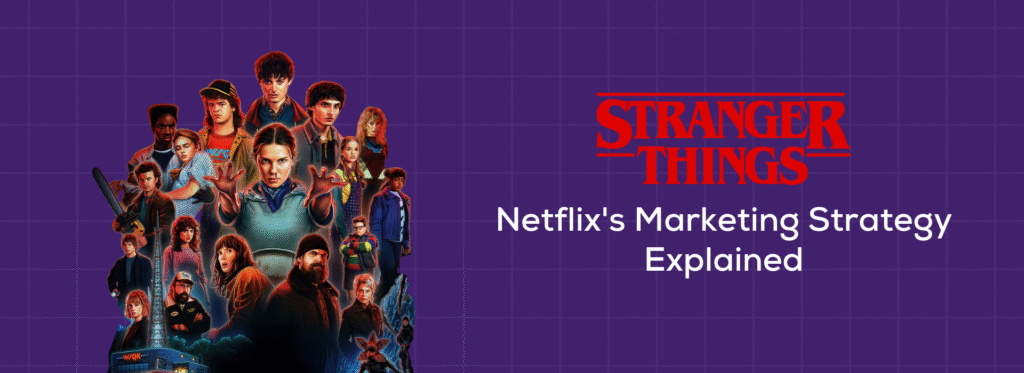
Stranger things: Netflix’s Marketing Strategy Explained

All Post Stranger things Netflix’s Marketing Strategy Explained Stranger Things isn’t just a show anymore — it’s a global emotion. When Season 5 finally arrived, the internet exploded. Fans rushed to Netflix the moment it dropped. Memes took over Instagram. TikTok went wild. News headlines screamed record-breaking numbers. And while we all enjoyed the chaos in Hawkins and the Upside Down, something much bigger was happening behind the scenes… Netflix wasn’t just releasing the final season — Netflix was executing one of the smartest marketing strategies the streaming world has ever seen. From transforming metros into Upside Down portals, to launching immersive fan events across continents, to tapping into nostalgia at the perfect moment — Stranger Things Season 5 became a global marketing masterclass. And the result? Millions of subscribers, massive buzz, and Netflix once again at the center of pop culture. In this case study, we’re going deep into: How Stranger Things became Netflix’s ultimate subscriber magnet How Season 5 was marketed across every stage of the funnel How India became a major part of the marketing strategy What digital marketers can learn from Netflix to grow any brand If you’re a marketer, student, creator, or someone who just loves Stranger Things — this breakdown will change the way you look at marketing forever. Let’s enter the Upside Down of Netflix’s strategy… How popular is Stranger Things? Before we talk about marketing, we need to understand the power of the product. Record-breaking numbers Stranger Things is Netflix’s biggest English-language show. Season 4 already held a top spot in the “most-watched English series” list with over 140 million views in its first 30 days.  When Stranger Things Season 5 (final season) dropped, the first volume pulled in 59.6 million views in just six days, making it the biggest English-language premiere week in Netflix history. So from a marketing point of view, Stranger Things is: A tent-pole IP (intellectual property) that can attract new users, bring back old users, and make existing subscribers stay longer. Source : instagram Stranger Things Marketing Strategy (Positioning) To use a show as a growth engine, Netflix first had to shape the brand of Stranger Things in the audience’s mind. One show, multiple hooks Netflix didn’t sell Stranger Things as just a “horror show” or just a “teen drama”. They positioned it as a multi-layered experience: For teens & young adults: a show about friendship, growing up, and fighting monsters For 80s and 90s kids: a nostalgic trip to old music, old bikes, old games For families: a story-driven series they can binge together For genre fans: a mix of horror, sci-fi, mystery and emotional drama This multi-hook positioning made it easier to promote the show to different audience segments with different creatives and messages. A strong visual identity Stranger Things has one of the most recognizable visual identities in entertainment — from its red and black neon style, creepy Upside Down vines, flickering lights, and monster imagery to its retro 80s typography and color palette. These elements are used everywhere across the marketing ecosystem: trailers, posters, metro wraps, AR experiences, fan events, and branded activations like InstaStrange. For marketers, this is a perfect example of how a strong, consistent visual language helps a campaign stand out instantly, making the show memorable across every platform and touchpoint. How Netflix used Stranger Things popularity to attract more subscribers Season 5 as a global “One Last Adventure” event Netflix launched Stranger Things 5: One Last Adventure fan events in cities across Europe, Asia and the Middle East (Tokyo, Bangkok, Warsaw, Riyadh, Manila, Kuala Lumpur, etc.) Immersive Hawkins & Upside Down SetsVisitors walked through full-scale replicas of iconic locations like Hawkins High corridors, Eddie’s trailer, Vecna’s lair, and Upside Down portals — designed for fans to experience scenes they’ve only watched onscreen. Themed Food, Drinks & MerchPop-up stalls served Stranger Things inspired snacks like frozen “Demogorgon bites,” “Surfer Boy Pizza,” and neon mocktails, along with exclusive merch collections only available at the event. Exclusive Early Screenings & Sneak PeeksAttendees watched never-before-seen clips and select scenes from Season 5 before the global release — creating FOMO and generating early hype online. Dedicated Social Media Photo ZonesNetflix installed professionally lit photo booths (e.g. posing with Eleven’s telekinesis scene, sitting on the iconic Living Room couch with Christmas lights, or standing inside a portal) to drive Instagram-worthy content and viral sharing using branded hashtags. Actor Appearances & Live Fan ActivitiesAt some global events, fans interacted with cast members, joined Stranger Trivia sessions, and collected digital badges — boosting community engagement and loyalty. Multi-part release to keep people subscribed Stranger Things Season 5 is released on Netflix in three distinct volumes/parts. The release schedule is: Volume 1 — first four episodes, released 26 November 2025 globally (in many places, 27 Nov due to time-zones) Volume 2 — next three episodes, released 25 December 2025 (Christmas Day) Finale (Volume 3 / Episode 8) — full season finale, released on 31 December 2025 (New Year’s Eve) Why This Release Pattern Acts as a Retention & Engagement Strategy By splitting the season into three parts across two major global holidays (Christmas and New Year’s Eve), Netflix ensures the show remains a “holiday-event” — times when people are more likely to watch together, binge, or re-subscribe if they had paused the service. Instead of a one-time “big release” spike, the three-part rollout creates multiple touchpoints for attention: Volume 1 — draws in existing fans and new watchers. Volume 2 — pulls viewers back during Christmas, a period of downtime for many. Finale — delivers closure/finale buzz at New Year’s, encouraging people to stay subscribed or return. Full-funnel Stranger Things Season 5 marketing strategy Here’s how Netflix strategically marketed Stranger Things Season 5 across every stage of the funnel: Top of the funnel: Awareness Goal: Make sure everyone knows “Stranger Things Season 5 is here – and it’s big.” Record-breaking headlines Media coverage shouted: “Stranger Things Season 5 becomes Netflix’s biggest English-language debut with 59.6M views”. These

Stranger things: Netflix’s Marketing Strategy Explained Read More »

Epixable Academy

Epixable Academy – The Best Digital Marketing and Graphic Design Courses in Mysore

All Post Epixable Academy The Best Digital Marketing and Graphic Design Courses in Mysore Welcome to Epixable Academy, located in the heart of Mysore Our mission is simple: to prepare students and professionals in today’s fast-changing marketplace by teaching them the essentials of digital marketing, graphic design, and branding. As more businesses—big and small—move online, these powerful skills have become crucial for building a trusted brand, connecting with customers, and driving growth. At Epixable Academy, we’re committed to empowering students with hands-on training and give easy-to-follow lessons, real practice, and friendly support—so you can learn, grow . No matter the starting point, Epixable Academy is dedicated to helping students build strong skills and achieve success in the world of digital marketing and design. Why Digital Marketing and Branding Are Important for Business How Digital Marketing and Data Tools Help Businesses Grow Digital marketing helps businesses reach more people online by using ads, websites, social media, and email. It makes it easy to find new customers and keep old ones happy. With digital marketing, businesses get useful data and tools, like Google Analytics and Facebook Insights, to see what works best—such as which ads or posts get more likes, what customers enjoy, and what makes them buy. By using this information, businesses can quickly improve their marketing, make better decisions, fix problems, and spend their money wisely. This leads to more sales, smarter choices, and happier customers. How Branding Helps with Trust and Consistency Branding means using the same logo, colors, and message everywhere, and graphic design helps bring these parts of the brand to life. When a business uses good graphics to design things like posters, flyers, social media posts, and websites, everything looks neat, attractive, and trustworthy . This makes the brand easy to recognize and remember. Strong graphic design also helps a business look professional. When customers see the same brand  creative designs again and again, they feel safe to buy from it. Good branding help a business stay important and stand out, even when there is a lot of competition. A poster without Branding A poster with Branding A poster with Branding What Students Learn at Epixable Academy At Epixable Academy, learning goes far beyond textbooks. Students dive right in and practice real skills by building websites, creating digital ads, designing eye-catching graphics, and planning social media campaigns—just like real marketers and designers do every day What Will Be Taught in Digital Marketing course In Digital Marketing course we teach : How to build and manage websites using WordPress The basics of digital marketing and how everything works together Smart ways to improve websites with SEO (search engine optimization) Creating and managing social media posts to grow a brand online Running ads on Google, Facebook, and other popular platforms Writing simple and clear content for blogs and websites The basics of graphic design, like making posters, flyers, and amazing social media images using Canva Creating a strong brand look and message that stands out Using easy tools like Google Analytics to see what works best Working on real projects to practice every skill What Will Be Taught in Graphic Design course In  graphic design course , students learn the skills needed to create eye-catching designs for websites, social media, and print. The course is beginner-friendly and also teaches how to design a logo which will stand out and help the business  Students learn how to design logos that make a brand stand out. They discover how to create packaging designs that look professional and attractive. The course teaches how to make social media posters that grab attention. Students practice making product mockups and presentations for brands. Brand identity design is taught, helping students develop a complete look for a business. Flyers and brochures are designed for both print and online use. Students use Adobe Photoshop and After Effects to create and edit their graphic designs. Every lesson helps build strong brand visuals and share messages in creative ways. Real-world projects give students hands-on practice with all these skills. Additional Creative and Communication Courses Offered Along with graphic design, Epixable Academy offers courses in motion graphics and video editing, where students learn to create animated designs and professional-looking videos for brands and social media. The UI/UX design course teaches how to design websites and apps that are easy for everyone to use, making digital experiences smooth and enjoyable. There is also a communication practice course that helps students speak and present their ideas clearly, work better in teams, and handle client projects with confidence. All these extra skills give students a complete creative toolkit, helping them build attractive visuals, tell stories through video, and design user-friendly websites. Students can use these skills to work in creative jobs, start their own projects, or help businesses grow online. Student Projects in designing and Web Development Social Media Posters Responsive Website Development Our Teaching Style At Epixable Academy , Our classes are designed to be lively, interactive, and welcoming for everyone—whether you’re a complete beginner or looking to sharpen your skills. We focus on practical learning, real-life projects, and personal guidance, so every student feels confident and supported from day one. Here’s how our teaching approach makes learning easy and exciting: Real Projects, Real Learning Students learn by working on real projects from the start. This hands-on practice helps everyone understand the lessons better and gain skills they can use outside the classroom. Every project is designed to be practical and useful for today’s world. 1-to-1 Mentoring Every student gets one-to-one support from teachers. This means you can ask questions any time and get clear, personal help whenever you need it. With this guidance, learning becomes easier and more comfortable for everyone. Student Presentations Students take part in regular presentation sessions where they share their work with the class. These sessions help everyone practise speaking clearly and confidently. By explaining their ideas and answering questions, students improve their communication skills and learn how to express themselves to others — making

Epixable Academy – The Best Digital Marketing and Graphic Design Courses in Mysore Read More »

SEO Difficult To Learn? Real Answers for Beginners

All Post Is SEO Difficult to Learn? Real Answers for Beginners Author: Vinay Jadhav | Trainer at Epixable Academy Updated on: September 08, 2025 Is SEO Difficult to Learn? When people first start, they often feel lost. There are so many things to understand — Google updates, keywords, rankings, backlinks, and more. Feeling overwhelmed is completely normal. Think about it like learning to ride a bicycle. The first time, you might fall a few times, but once you get the balance, it becomes easy and even fun! SEO is just like that. Contents Is SEO even important? 3 Pillars of SEO On-page SEO Off-page SEO What is Technical SEO? How to Optimize for AI Engines Which are the best free SEO tools for Beginners? FAQ’s Before We Ask “Is SEO Hard?”, Let’s First Understand If SEO Is Even Important Before thinking about whether SEO is difficult or easy, we need to answer a more basic question:Is SEO still important in today’s world? Many beginners get confused because they often hear people asking things like “Is SEO dead?” These kinds of questions make you wonder if learning SEO is even worth your time. And honestly, it’s normal to feel unsure. People everywhere are still searching for information online — every minute, every second.If people search, then websites need to show up.And for websites to show up, SEO has to exist So no , SEO is not dead , but yes SEO is changing. Search is no longer only about typing keywords into Google. Today, people also use voice search, smart assistants, and AI tools like ChatGPT, Gemini, and other answer engines. These tools don’t just give links — they give direct answers. That means modern SEO is not only about ranking on Google, but also about giving clear, helpful answers that AI systems can use. So the real question is not “Is SEO dead?”The real question is : How do we evolve with SEO as search continues to evolve? Once you understand this, learning SEO makes much more sense — because now you’re not just learning for Google, you’re learning for the entire internet, including AI systems that deliver answers. The 3 Non-Negotiable Pillars You Must Learn to Understand SEO Getting good at SEO might sound tough, but when you break it down, there are just four big areas (or “pillars”) you need to focus on. Think of these as the building blocks that make any website strong in the eyes of search engines. Let’s look at each one in a simple way: On-Page SEO: This means making changes right on your website so search engines know what your pages are about. You want each page to be easy to read and really helpful, both for people visiting and for Google trying to figure out your site. Keywords Keywords are the main clues that tell search engines what your page is about. Using the right keywords is the key to getting your site seen by people who are searching online. Where to Place Keywords: Page Titles and Meta Title The meta title is what shows up on the search results page (the blue link people click). Your primary keyword should be right here, close to the start. Example : If your main keyword is “learn SEO” a page title could be: “Learn SEO: Simple Steps for Beginners” Headings (H1, H2, H3 Tags) H1 tag: This is typically your main heading at the top of the page. There should only be one H1 tag per page, and it should include your most important keyword. H2 tags: These are sub-headings for breaking your content into sections. Use secondary keywords or related phrases here. H3 tags: These go under H2s for even smaller sections; you can use smaller keyword variations if it fits naturally. Meta Description This is a short summary (about 150-160 characters) about your page, seen under the link in search results. Include your main keyword near the start. Make it inviting so people want to click. Example : “Learn SEO step by step with easy tips for beginners. Discover how to use keywords, headings, and meta descriptions to boost your website.” How to Use Keywords in Your Content Use keywords naturally in your writing. Don’t overuse them—make sure your sentences make sense. Try your main keyword once or twice in every hundred words. Focus on being clear and helpful How Much to Place & What to Avoid One H1 tag per page — your key topic. Use H2 and H3 tags as needed to organize sections. Place your main keyword in at least one H2, and naturally in the content. Use each keyword where it makes sense, but avoid “stuffing” (using it too much). Don’t forget your meta title and meta description—they matter both for search engines and for getting clicks! Quality Content: Write clearly and keep your information helpful. If visitors find answers quickly, search engines will notice. Images and Alt Text: Write clearly and keep your information helpful. If visitors find answers quickly, search engines will notice. Internal Links: Link to other useful pages within your own website. This makes it easier for people to find more info, and for search engines to crawl your site. Off-Page SEO: Off-page SEO is all about what happens outside your website that helps build its reputation Backlinks: When trusted websites link to yours, it’s like getting a digital thumbs-up. More backlinks from high-quality sites can really boost your rankings. Social Shares: If people share your content on social media, it brings more visitors and tells search engines your site is worth sharing. Online Mentions: Getting mentioned in online articles, blogs, or forums can also help your reputation. What is Technical SEO? Technical SEO is all about making sure your website works well behind the scenes so search engines can easily find and understand your pages. When your technical setup is good, your site loads faster, works on all devices, and shows up correctly in search results. Main Things to Focus On in Technical SEO: Site

SEO Difficult To Learn? Real Answers for Beginners Read More »

Is SEO dead?

Understanding How It Powers AEO, GEO, and the Future of Search

All Post Is SEO Dead? Understanding How It Powers AEO, GEO, and the Future of Search Author: Vinay Jadhav | Trainer at Epixable Academy Updated on: September 08, 2025 “Is SEO dead?”It’s a question that resurfaces every time a new technology changes how we search online. With AI tools like ChatGPT and Google Gemini giving instant answers, many believe traditional SEO has lost its value. But the truth is, SEO isn’t dead — it’s evolving. What’s changing is how we search, not why we optimize. SEO has now become the foundation of modern search systems like AEO (Answer Engine Optimization) and GEO (Generative Engine Optimization) — the new ways information is found and understood in the age of AI. Contents What SEO Really Means? The Future Of SEO What is Answer Engine Optimization(AEO)? Why did AEO become important? How to do AEO? What is the use of AEO? What is Generative Engine Optimization(GEO)? Key Aspects of GEO AEO vs. GEO: Why Your Website Needs Both​ Conclusion FAQ’s What SEO Really Means ? Imagine you’re in the world’s biggest library—a place so massive you could wander for days and still not see every corner. Books are stacked everywhere: on tables, in hidden nooks, tucked behind others. If you’re searching for something special, how would you ever find it in all that chaos? This is what the internet looks like—millions of websites, blogs, and pages scattered across the digital world. SEO, or Search Engine Optimization, acts like the friendly librarian who helps you find exactly what you need in seconds. So, what does SEO really do? SEO organizes and labels everything online.It’s like putting clear signs and directions on every shelf and book so that anyone (or any search engine) can locate the right page almost instantly. SEO makes the best content visible.With so many websites out there, SEO ensures the most helpful, trustworthy, and relevant answers appear at the top. Think of it as highlighting the most popular and well-loved books, so no one misses out. SEO helps both people and machines understand content.Search engines, like Google or Bing, are incredibly fast readers, but they need help understanding what each page is about. SEO uses special clues (like keywords, headings, and links) to make sure search engines get the content and show it to the right people. SEO builds trust and authority.When a website keeps showing up in search results with clear, accurate answers, people begin to rely on it—just as you’d trust a guide who always points you in the right direction. The Future Of SEO SEO started as a way to help people find websites using the right keywords. Today, search is smarter—people want instant answers, and they ask AI assistants and voice devices, not just search engines That’s why  Answer Engine Optimization (AEO) helps your site become the direct answer to common questions, like those found in featured snippets or voice responses.  Generative Engine Optimization (GEO) takes it further by making your content “AI-friendly,” so tools like ChatGPT can understand, use, and cite your information in detailed responses. SEO is what everything else depends on. Without SEO, even the smartest search engines and AI tools wouldn’t know where to look or what answers to give. All the new ways of finding answers—AEO and GEO—can only work if good SEO is there first. If you want to be found, trusted, and chosen online, SEO is the first thing you need. Everything else comes after. What Is Answer Engine Optimization(AEO)? You usually go to a search engine, type your question, and see a list of links. But nowadays, instead of clicking lots of links, you often get the answer right at the top—sometimes in a box, sometimes read aloud by Alexa or Google Assistant. AEO is what makes this possible. It’s a method of preparing your website so that search engines and voice assistants can easily find answers on your site and use them directly when someone asks a question. Why did AEO become important? AEO became important because search engines are now smarter—they don’t just hunt for keyword matches but try to truly understand questions and provide the best, most accurate answers. As a result, websites and businesses want their information to be chosen and shown first. By using AEO, they organize their content so it’s clear and trustworthy, making it easier for search engines and smart devices to pick their answers above others. This helps brands reach more people and makes their content stand out in today’s fast, answer-focused world How to do AEO? Direct AnswersGive simple, clear responses to questions people ask.Example : If someone asks, “What is the capital of France?” your content should say exactly, “The capital of France is Paris.” No extra words, just the answer Good OrganizationArrange your content using headings, bullet points, and FAQ sections.Breaking things into clear categories  (“What,” “How,” “Why”) helps search engines quickly identify and display the right answer User IntentFocus on what people actually need, not just the words they use.If users search “Best way to save money,” offer practical steps, like “Create a budget, compare prices, avoid impulse buys,” instead of just defining the phrase. Technical Help for Search EnginesAdd schema markup—a special piece of code that highlights questions and answers or important facts on your site.This makes it much easier for Google, Alexa, or Siri to find and use your information. Accuracy and TrustMake sure your content is correct, well-organized, and fact-checked.Websites that are reliable and up-to-date are favored as sources for direct answers. Optimize for Mobile and VoiceWrite in a friendly, natural tone so your answers sound good when read aloud by voice assistants.Check that your site is easy to view and use on mobile phones, since many answers are delivered on-the-go. What is the use of AEO? Shows your website as the main answer in search results and voice assistants. Content that’s optimized for AEO is more likely to show up at the very top of Google results as a featured answer or

Understanding How It Powers AEO, GEO, and the Future of Search Read More »

Seraphinite AcceleratorOptimized by Seraphinite Accelerator
Turns on site high speed to be attractive for people and search engines.